

The Carriage House and lawn at Magnolia Plantation & Gardens. Photo: The Divines Photo & Film.
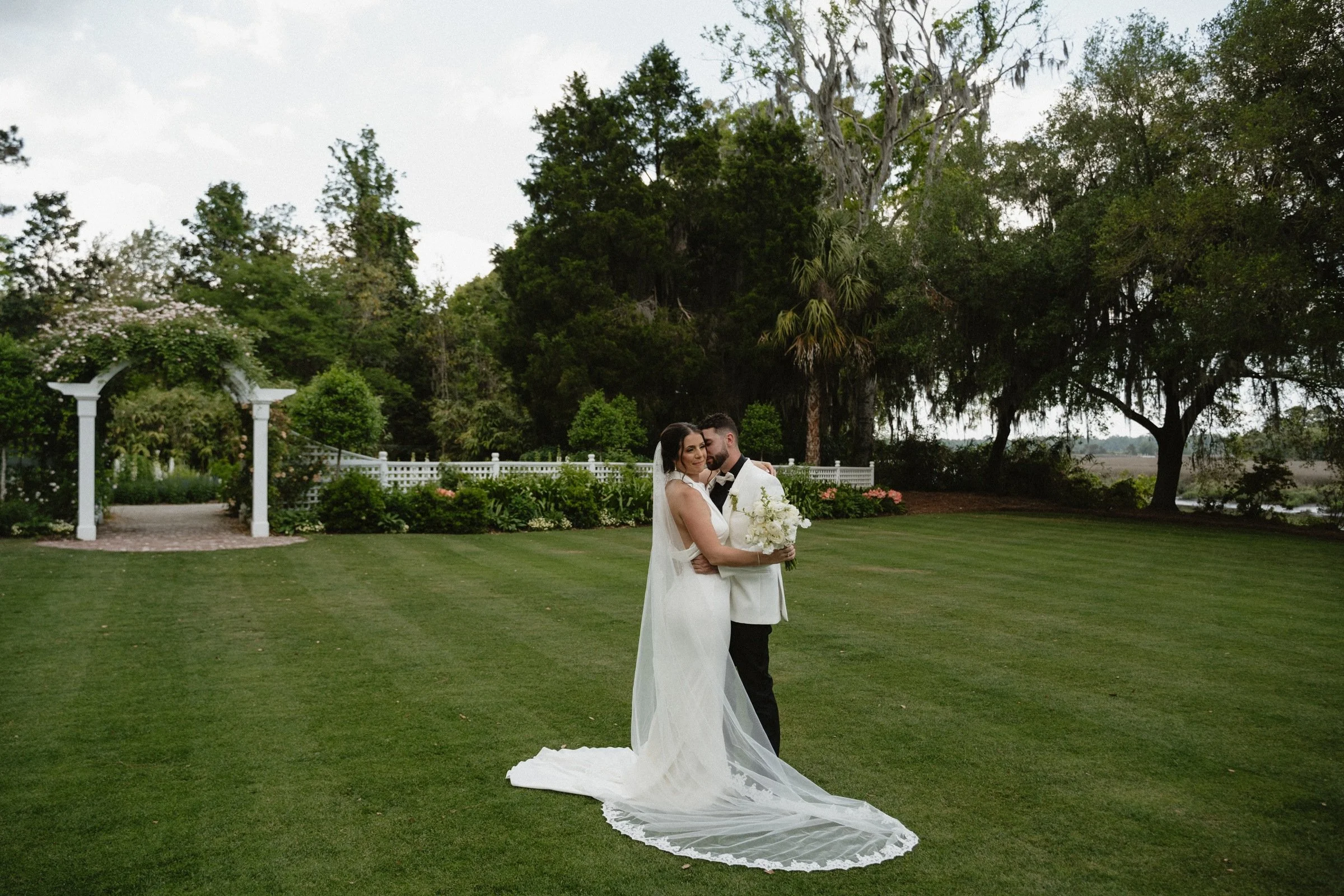
A quiet moment on the lawn at Magnolia Plantation & Gardens. Photo: The Divines Photo & Film.
Magnolia Plantation & Gardens is a venue we genuinely love working at. If it is on your Charleston wedding shortlist, we understand the appeal. We also want you to understand how the Carriage House, Oyster Patio, and lawn will work for your actual celebration before you commit to a guest count and budget.
We have been receiving more Magnolia inquiries lately, and the same questions keep coming up. How many guests can comfortably dine and dance inside? Do you need a tent? Who sets up the tables and chairs? This is the practical guide we want couples to have: positive about the possibilities, honest about the planning, and useful enough to return to as your wedding takes shape.
Carriage House capacity: Plan the whole reception, not just the seats
Couples often come to us having seen capacity figures of 200 or more online. A capacity figure alone does not tell you whether your particular dinner-and-dancing layout will work.
Your floor plan needs room for much more than chairs:
• Dining tables, with chairs pulled out and guests seated.
• A dance floor and space for the DJ or musicians.
• Food stations, buffet queues, or plated-service routes.
• Clear paths between tables for guests and waitstaff.
• Bar access and somewhere for guests to wait without blocking a walkway.
• Cake, gifts, and the other small stations that add up.
We have built a dinner layout for 124 guests inside the Carriage House using a central row of banquet tables with rounds on either side. That layout moved dancing and lounge space outside under a tent. It was a solution for that reception, not proof that the same guest count would work with everything indoors.
In another planning conversation, even 115 guests with indoor dining, food, a DJ, cake, and dancing required a serious discussion about adding a tent. For a smaller celebration, an indoor dinner-and-dancing layout may be possible. The answer depends on the whole plan, not a universal cutoff.
Our advice: Ask for a working floor plan before you rely on an advertised maximum. A layout that fits on paper must also feel comfortable once guests and service staff are moving through it.
How we build a Magnolia floor plan
We start with your priorities: where you want dinner, whether indoor dancing matters to you, your food-service style, and how much of the evening you want outdoors. Then we test the spaces together.
One approach we like is dinner inside the Carriage House, cocktail-hour gathering on the Oyster Patio, and dancing, a lounge, and a satellite bar under a lawn tent. The existing indoor bar can remain part of the plan, so guests do not all have to cross the property for a drink.
We also work around the building's fixed features. The indoor bar is not something we plan to move. Food stations need to leave catering routes clear, and the dance floor cannot turn access to the bathrooms into an obstacle course. Outdoors, equipment needs a suitable surface and the vendor team needs a coordinated power plan.
There is no single Magnolia layout we repeat for every couple. We look at the experience from arrival through dinner, dancing, and the last guest leaving, then place the tables around that experience.
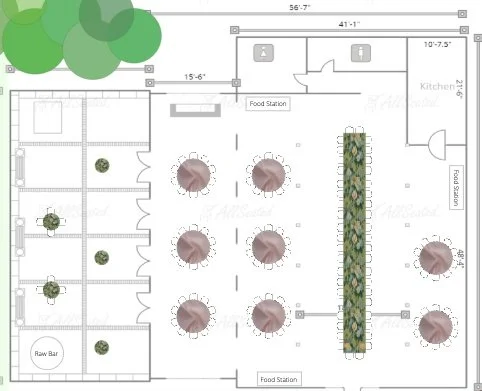
An example of one of our Carriage House dinner layouts, with banquet tables through the center and rounds on either side. This example moves dancing outside; it is not a universal capacity promise. Planning diagram: Love, Evermore Events.
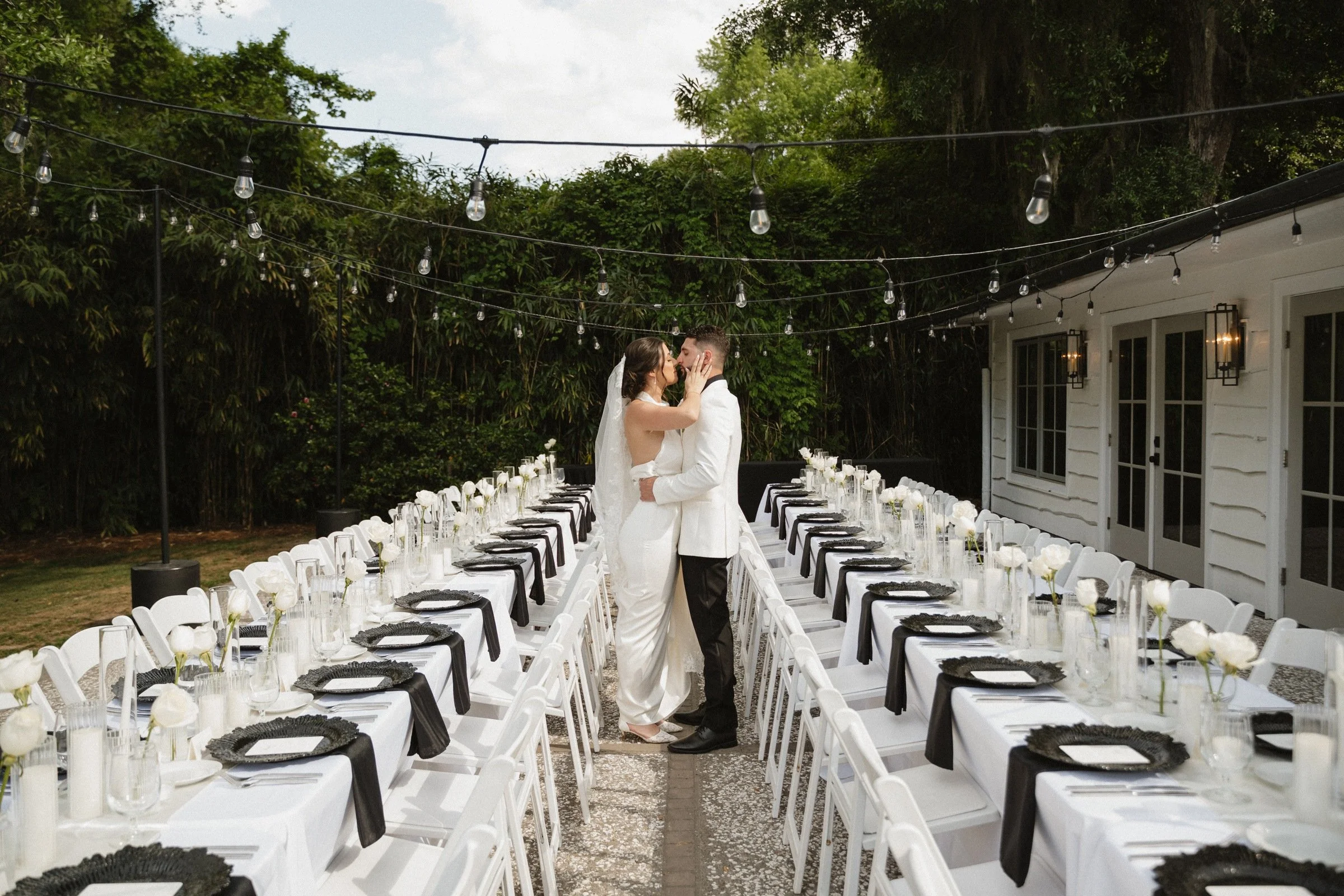
Long dinner tables on the Oyster Patio beside the Carriage House. Photo: The Divines Photo & Film.
The Oyster Patio: Have a tent plan early
We recommend tenting the Oyster Patio and, at minimum, having a tent reserved for the weather plan. If that space is doing important work in your layout, losing it to rain cannot be an afterthought.
A reserved tent is different from a tent you have decided to install regardless of weather. Ask your rental company to spell out:
• The approved tent type, size, and placement for the space.
• What is included in the quote: tent, installation, delivery, anchoring, lighting, and tax.
• The nonrefundable reservation amount and the final weather-decision deadline.
• What you still owe if the tent is not installed.
• How the plan changes if the patio is too hot, wet, or windy to use comfortably.
We would not give every couple one flat Oyster Patio tent price. Size, anchoring, labor, delivery, and the supplier's reserve terms change the total. Get an itemized quote for your wedding rather than treating a package total or an old estimate as today's tent-only price.
Shade and rain coverage do not automatically mean cooling. A summer tent plan still needs a separate conversation about airflow and guest comfort.
More than 125 guests: Explore the lawn, and know you can go larger
For a guest count over 125, we look at using the lawn as part of the reception plan. A sailcloth tent can create a beautiful setting there and give us more flexibility than asking the Carriage House to do everything.
A midsize tent around 44 by 63 feet is one example we have used in planning, not the largest option. A December wedding next year will feature a tent over 100 feet long. Larger celebrations can be possible; the footprint, service needs, weather backup, and budget have to grow with them.
Staking is allowed on the lawn in front of the Carriage House, with placement and installation coordinated for the event. Tent size is only the start of the conversation. We also plan access, lighting, power, flooring where appropriate, the entertainment setup, and the route between indoor and outdoor spaces.
The installation and removal schedule matters, too. Coordinate it with the venue and rental company early, including morning access, the available setup window, and any late-night pickup charges. Do not assume that a next-morning tent pickup means every other rental can stay overnight.
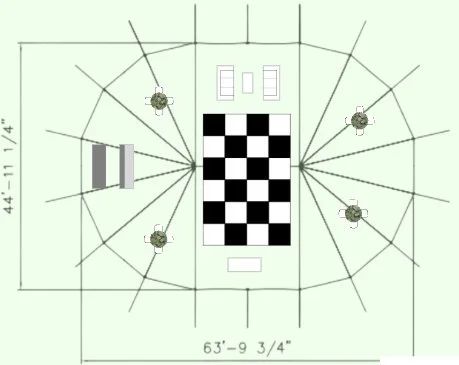
One lawn-tent concept for dancing, lounge seating, and a satellite bar. Tent size and placement vary with the event. Planning diagram: Love, Evermore Events.
Flooring: Strongly recommended, especially when rain means mud
We highly recommend flooring in a tent space, but it is not automatically necessary for every wedding in every season. We consider the time of year, ground conditions, what will happen under the tent, and the rental company's requirements.
Frequent summer rain can leave the ground muddy. That is a situation where flooring becomes especially important to us. A tent roof does not, on its own, give guests a firm, dry surface underfoot.
Full tent flooring and the subfloor beneath a dance floor are different things. A rental company may require subflooring beneath a dance floor installed on grass even when the rest of the tent is not fully floored. Ask for both scopes to be clear in the quote.
Flooring also affects the installation plan, labor, and removal schedule. We would rather budget for it early than discover late in planning that the comfortable outdoor reception you pictured needs more infrastructure than expected.
Choose the season with the outdoor plan in mind
At Magnolia, your date and your floor plan are connected. The more your reception depends on outdoor space, the more closely we need to plan for heat, rain, wind, and the possibility that the outdoor plan cannot be used safely.
For a summer date, we talk honestly about heat, humidity, frequent rain, and mud. Fans can be part of the comfort plan, but they are not the same as air conditioning. If you want a cooled tent, have the tent and climate-control suppliers assess the complete setup, including suitable enclosure, power, installation, and cost. We do not recommend budgeting from an air-conditioning unit price alone.
For dates that fall during hurricane season, discuss the venue's and vendors' severe-weather policies, decision deadlines, cancellation or postponement terms, and a safe shelter plan. A tent is not a substitute for an emergency plan, and a larger guest count makes the indoor fallback especially important.
A cooler-season date can make an outdoor reception more appealing, but no month guarantees comfortable or storm-free weather. We have helped move a planned summer wedding to December because the original combination of guest count and outdoor infrastructure needed a different approach. The lesson is to choose the date, guest count, and reception plan together.
Tables and chairs still need a setup team
Magnolia provides some tables and chairs, but those items still have to be placed, arranged, and put away by someone. Their inclusion is not a reason to leave setup and breakdown labor out of the budget.
Your planner should be directing the wedding and coordinating vendors, not unexpectedly becoming the furniture crew. For Magnolia weddings, we require at least one, and sometimes two, assistants on site, or a hired setup and breakdown team in addition to the work covered by your rental company.
Before wedding week, put the responsibilities in writing:
• Who places and removes the venue's tables and chairs?
• Who installs rental furniture, linens, flooring, and lighting?
• Who handles a ceremony-to-reception change if your plan needs one?
• Who clears personal decor and manages the final breakdown?
• Which items must leave that night, and which may be collected later?
A clear labor plan protects your timeline and lets the planning team focus on the people and details that need their attention.
A planner belongs in the budget from the start
Magnolia requires a wedding planner, so include that expense in your overall wedding budget from the beginning. Do not treat planning as whatever is left after the venue, catering, and rentals are booked.
Confirm that your chosen service level meets the venue's current requirements, then discuss the staffing and setup scope your particular wedding needs. A planner who knows the venue can help you test the layout and spot costs before they become surprises.
What should a 115-guest Magnolia wedding budget start at?
For a wedding of around 115 guests at Magnolia, we would begin the planning conversation with a range of roughly $45,000 to $60,000 overall. The lower end is tight. This is a starting point, not a quote or a guaranteed package price, and it depends on the time of year and final guest count.
That figure is our planning guidance for the full wedding, not the venue rental fee. Your date, food and beverage choices, tent needs, flooring, rentals, staffing, design, and other vendor choices can move the total higher. A larger lawn reception or a more involved weather and climate-control plan needs its own budget review.
Before you sign, ask us to test the guest count, layout, rental scope, and priorities against your actual budget. We love Magnolia and want couples to choose it with a clear understanding of what their celebration will need.
Planning a wedding in Charleston and the Lowcountry, or in the Charlotte area of North Carolina? Love, Evermore Events would love to help you build a thoughtful plan, from the first venue decision to the final setup detail. Visit loveevermoreevents.com to start the conversation.
